We Invested Wisely. The Returns Go Beyond Money.
What 30 years of ministry marriage taught us about what actually pays off
This month, Dave and I celebrated 30 years of marriage.
Thirty.
Which honestly feels slightly offensive because, in my head, I’m still 32, buying throw pillows at Homesense, and convinced I can survive on five hours of sleep and coffee.
But here we are.
Thirty years later. Four adult children. Two married. Grandbabies are now running around. A lifetime of ministry, side jobs, sacrifice, travel, hard seasons, hilarious stories, stretched budgets, answered prayers, and more growth than either of us could have imagined when we said, “I do.”
When people look at our life now, they usually see the fruit.
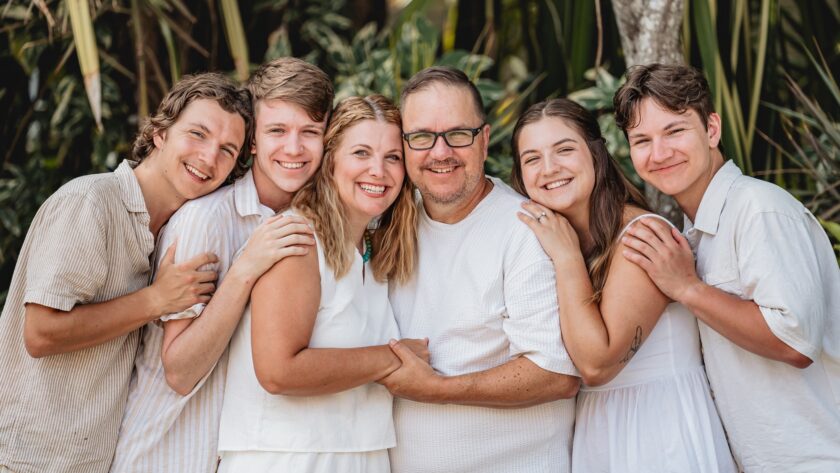
The family trips. The closeness. The photos. The laughter around the table. The fact that our adult children still genuinely want to spend time with us & with each other.
What they don’t always see are the years underneath it all.
Because none of this happened accidentally.
The Early Years Were Not Glamorous
I was 23. Dave was 29. That’s where this story starts.
Dave was a church-planting pastor, which means Sunday was the main event, but never the only event. Mid-week services. Youth ministry. Men’s ministry. Retreats. Weddings. Funerals. Crisis calls at all hours of the day and night. Not to mention the building renovations and maintenance. Ministry doesn’t clock out. We learned that quickly.
We also opened our home in ways that went well beyond general hospitality. Teenagers, some carrying more than they should ever have to carry, moved in with us. Some stayed for weeks. Some stayed months. Some years. We said yes because that’s who we are.
And while Dave led the church, I was right beside him, creating websites, marketing materials, and a communication strategy, running women’s ministry, preaching when needed, and, yes, cleaning the church. All while working outside the home and raising 4 kids.
Planting a church and making less than minimum wage for most of our early years meant that Dave dug pools in the summer and worked overnight shifts caring for adults with special needs. I sold Pampered Chef on the side while working at a credit union, and then made a career shift into digital marketing. We had one car for most of our marriage. We rented out our basement. We took in international students. We said no to a lot of things other families around us were saying yes to, not because we were noble, but because we refused to spend money we didn’t have.
We were not wealthy. We were not leisurely. We were not coasting.
But we also never lived in fear.
We learned how to live carefully without living fearfully. And somewhere in the middle of all of it, Dave and I made a decision that some people didn’t understand and one we have never regretted.
We chose to invest in our family’s experiences together.
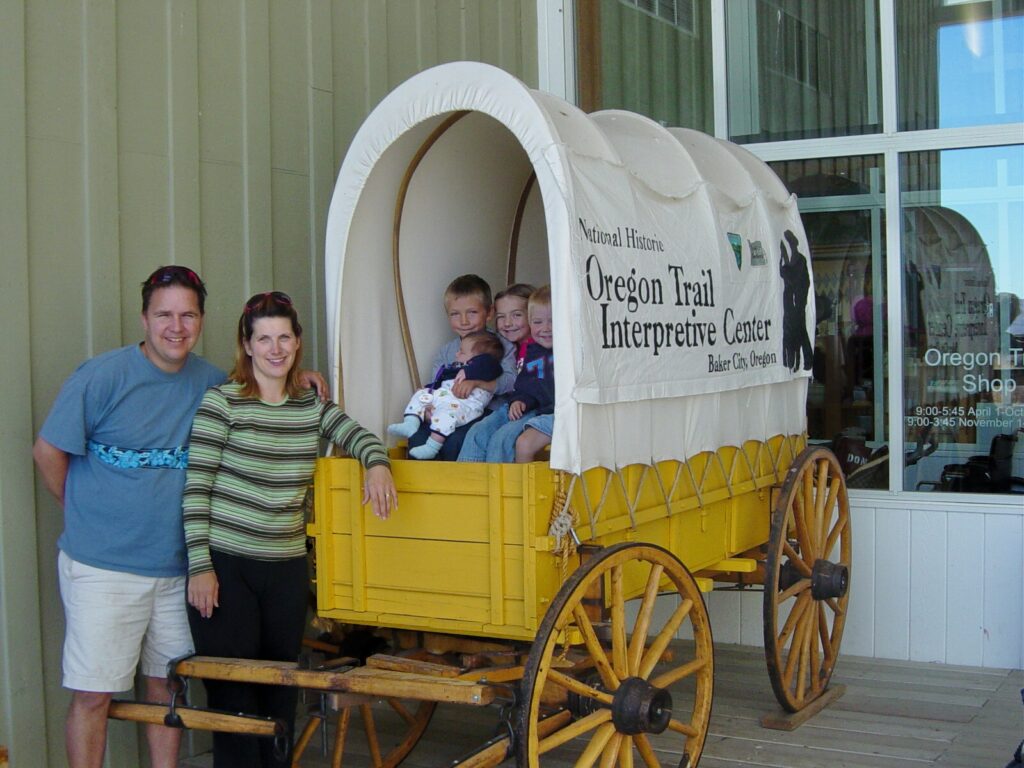
Not extravagantly. Not carelessly. We paid cash as much as possible. We planned carefully. We sacrificed in other areas to make it happen. We camped. We road-tripped. We used timeshares. We looked for ways to give our children a wider world without going into unnecessary debt.
Ministry Will Take From You. Decide In Advance What It Cannot Have.
This may be the most important thing I can say after thirty years in ministry life.
Ministry will take everything you do not intentionally protect.
Your time. Your evenings. Your weekends. Your emotional energy. Your marriage. Your children.
And church people rarely mean to do this. Most are good people. But the need is endless. There will always be another phone call, another crisis, another expectation. If you don’t establish what ministry cannot have, it will quietly become a machine that consumes your family while rewarding you for the sacrifice.
I had watched enough ministry families over the years to notice something troubling. A lot of people were building churches while slowly losing their marriages, their health, or their children. The applause outside the home was sometimes louder than the connection inside it.
We determined early on that our family was not going to be just another statistic.
Your children should not receive the leftovers of your calling.
I mean that gently. And I mean it seriously.
The church will always need more from you. If you wait for a less demanding season, for the right time to prioritize your family, that time will not arrive on its own. You have to decide in advance what ministry cannot have.
For us, that was non-negotiable: our family’s shared life. The experiences we built together. The memories we refused to postpone until retirement.

We Chose Connection Over Appearances
We were not building a lifestyle that looked a certain way from the outside. We were building something else entirely.
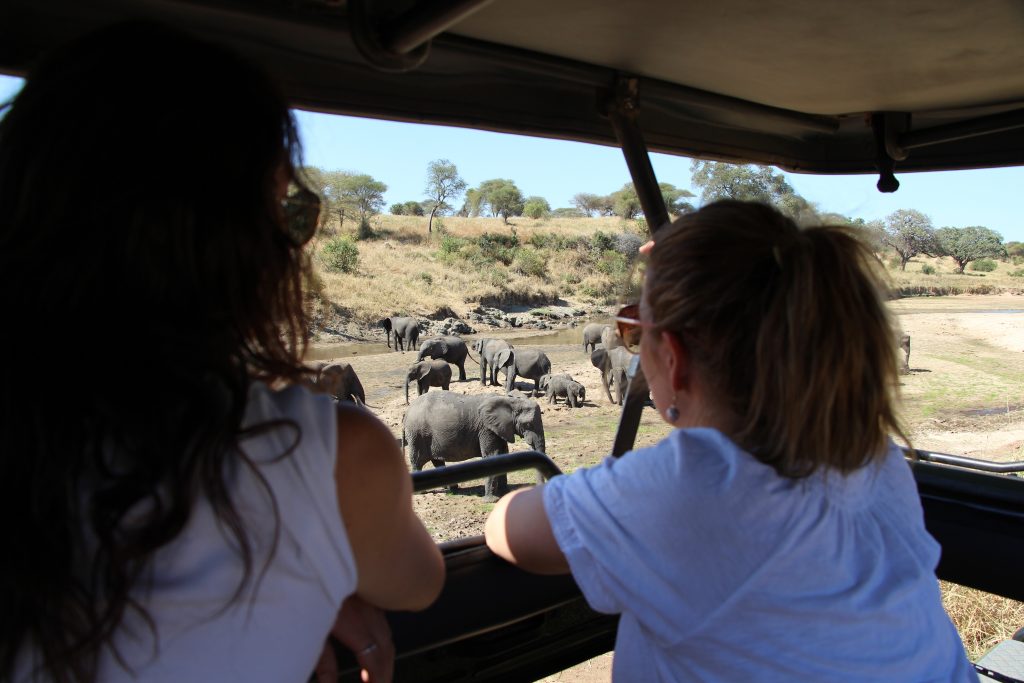
Road trips where the conversations got real somewhere around hour three. Experiences that gave our children a broader perspective on the world: on people, on culture, on how differently life looks depending on where you’re standing. Intentional pauses from the grind where we were just a family, without the roles and the weight of everyone else’s needs pressing in.
We took rest seriously. Not as laziness, anyone who knows our family knows that laziness has never been the problem, but as discipline. As a counter-cultural act of faith that said: we are not machines, our children are not projects, and our marriage is not a casualty we’re willing to accept in the name of serving others.
Some people didn’t understand it.
Some people didn’t like it.
People often judge visible fruit without understanding the invisible discipline behind it.
That’s fine. We kept going anyway.
And for those wondering whether living this way meant living small, Dave was known among our closest friends as the man who could find a deal. People joked about it. It became part of who he was and still is today.
But here’s what they may not have known: we gave. A lot. Vacations. Cars. Furniture. Clothing. Money. We were consistently generous with our time, talent, and treasure. We gave to people around us and beyond, often quietly. “Seed Time and Harvest” was never just a sermon illustration. It was how we lived.
Frugality was never the goal. Stewardship was.
We were never waiting for permission to live well. We were too busy building something worth coming back to.
We Didn’t Have Much Money. We Were Strategic.
This is the part that younger families sometimes struggle to believe when they see our life now.
There’s a difference between wealthy and strategic. We were the second one.
We asked the question “How can we afford this?” differently from most people. Not “can we afford this?” but “what would need to be true for us to make this happen?” That reframe changes everything. It puts your brain to work instead of shutting the conversation down. It invites creativity. It leaves room for God to show up in ways you didn’t anticipate.
When our kids were old enough, we brought them into that conversation too. We didn’t shield them from the reality that family experiences required planning and sacrifice. We invited them in, asked how they could contribute to something bigger than themselves. We were forming them even in the planning.
Here’s what the strategy actually looked like:
Dave’s paycheque covered household bills. Mine covered groceries, family experiences and the kids’ expenses. That boundary was non-negotiable. Our fun money was never in competition with the mortgage; it existed separately, on purpose.
We deliberately used Air Miles and Aeroplan points, running household bills through rewards cards and paying them off. My 17 years in banking taught me how to make financial products work for us rather than against us. Dave learned the timeshare system inside and out. Every upgrade path, every exchange option, every angle most owners never bother to figure out. He became the person other owners called with questions.
We knew our tax situation thoroughly. Home-based business deductions, pastoral tax credits, what could be written off and what couldn’t. We didn’t leave money on the table that was already ours.
We used our child tax benefit cheques as a dedicated family fund every single month. They never touched the daily budget. They were already spoken for.
And I was blogging by 2006. What started as a creative outlet became a legitimate and lucrative business for a decade, which, at its peak, put me among the top mommy bloggers in Canada before the word “influencer” even existed. It opened doors I never anticipated and funded our family in ways a second paycheque never could have.
Free tickets to entertainment venues and adventure parks. Clothes for the kids and me. Trips. Staycations. Groceries. Electronics. Weeks at summer camp for years, covered. I didn’t buy cleaning products, shampoo, or body wash for four years straight, thanks to being a P&G Mom. Household items arrived constantly, left right and centre.
All because I had built a platform and learned to use it strategically.
We believed from early in our marriage that God blesses faithful stewardship. That everything in our hands was already His and our job was to use it wisely, generously, and without fear. We prayed that over ourselves. We prayed it over our children. Everything their hands touch prospers. Not as a magic formula, but as a declaration of faith that shaped how we approached every opportunity, every resource, every open door.
Ask yourself honestly… what do you have that could create access? Writing. Photography. Hospitality. A trade skill. A professional network. A gift for connecting people. Something you’ve been doing casually for years without realizing it has real value.
Ask God to show you what’s already in your hands. Then use it without apology.
Our first years of family travel were in a tent. Then a pop-up trailer. Then an RV on a trade. Then a park model trailer at our favourite campground was gifted to us. Provincial parks, open roads, kids in sleeping bags, campfire meals. It wasn’t luxury. It was ours. And those memories are just as alive in our family today as any resort trip we took later.
Some of our best memories came from the scrappy years. The hotel room where we were all crammed in trying to figure out who was touching who. The road trips where somebody always needed the bathroom 14 minutes after the last stop. The camping trips where the rain showed up like it had a personal grudge.
That was the good stuff.
Not because it was perfect. Because we were together.
What Formation Actually Looks Like
It was never really about the trips.
The trips were a vehicle. A deliberate carving-out of time where our family could exist together without ministry pressing in from every direction. What we were actually doing was formation.
We were forming our children’s curiosity, their adaptability, their capacity for wonder and gratitude. We were forming our family’s culture: a shared history, inside jokes, meaningful moments, hard-won lessons that belong only to us.
We were forming our marriage. Choosing again and again to be a couple who still genuinely liked each other. Who still had stories to tell together. Who weren’t strangers by the time the kids left home.
And it wasn’t just the big trips. Looking back, the biggest things shaping our family were the invisible consistencies. Dinner around the table. Long conversations. Praying together. Showing up. Teaching our kids about money, generosity, how to work, how to love, and how to recover after mistakes.
Humour carried us through more than almost anything else. If you can still laugh together in hard seasons, you are richer than you realize.
Formation is not accidental. It requires intention, sacrifice in the right places, and the courage to say no to some good things to protect something essential.
And when you do the work consistently, over years, over decades, the results become unmistakable.
The Dividends Are Relational
Dave and I are at an age now where we can see the fruit of what we planted.
And some of that fruit has gone further than we ever imagined.
Quinton took his first mission trip to Peru at age 12, his second to Jamaica at 16, and made a pilgrimage to Israel at 19. Emma went to Kenya with me in 2018, and so did Laralee, who became our daughter-in-law in 2020. Jacob went to Bible school in Germany after he graduated from high school and spent three weeks over Christmas in Spain, Italy, and Switzerland. Liam lived on an island in Greece for the summer of 2024, attending Bible school.
We gave them a wide world early. And they went looking for more of it, not for Instagram, but to give back. To learn. To share their time, their talent, and their treasure with people and places far from home.
Their empathy is enormous. Not because we told them to care about the world, but because we introduced them to it early enough that it became part of who they are.
That is the relational dividend nobody talks about. The one that shows up not just at your dinner table but on the other side of the planet.
These relational dividends are worth more than anything else we have accumulated financially.
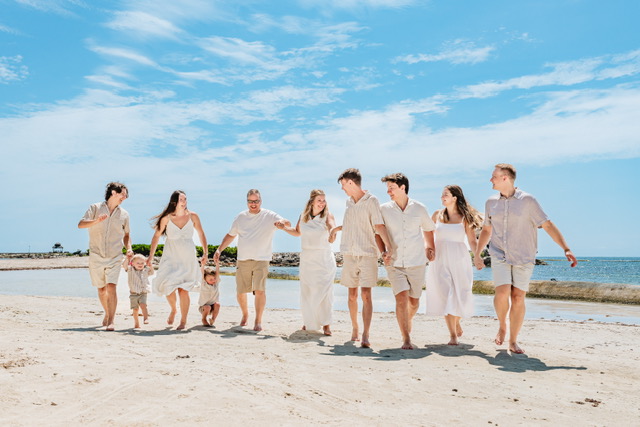
Our adult children still want to be around us. Still want to be around each other. There is genuine warmth, genuine closeness, and genuine gratitude. Not the strained politeness of a family that survived together but didn’t particularly enjoy the process. Our family group chats are absolute chaos some days. Memes. Inside jokes. Roasting each other lovingly. Random travel planning. Photos of grandbabies. Opinions nobody asked for.
And I love every bit of it.
We didn’t build a perfect life. We built a connected one.
And I want to say clearly to every ministry family still in the early years, still in the middle years, still in the season where the choices are in front of you:
It is not too late to choose this.
Don’t wait until there’s more money, more time, less stress, a better season. Life keeps moving while you wait. Children grow. Marriages drift or deepen. Years disappear.
Ministry is a calling worth honouring. But your family is a calling too.
Thirty years from now, when your children are adults sitting around your table, choosing to be there, not because they have to be, but because you built something worth coming back to. You will not regret a single intentional investment you made in them.
I promise you that.
Looking back now, I don’t regret the money we spent creating memories together. I don’t regret the trips, the laughter, the shared experiences, or the intentional pauses from the demands of life and ministry.
Because now, at almost 54 and 60, the dividends are sitting around our table.
And all four of our adult children, their spouses, and their children want to be there.
That is our legacy.